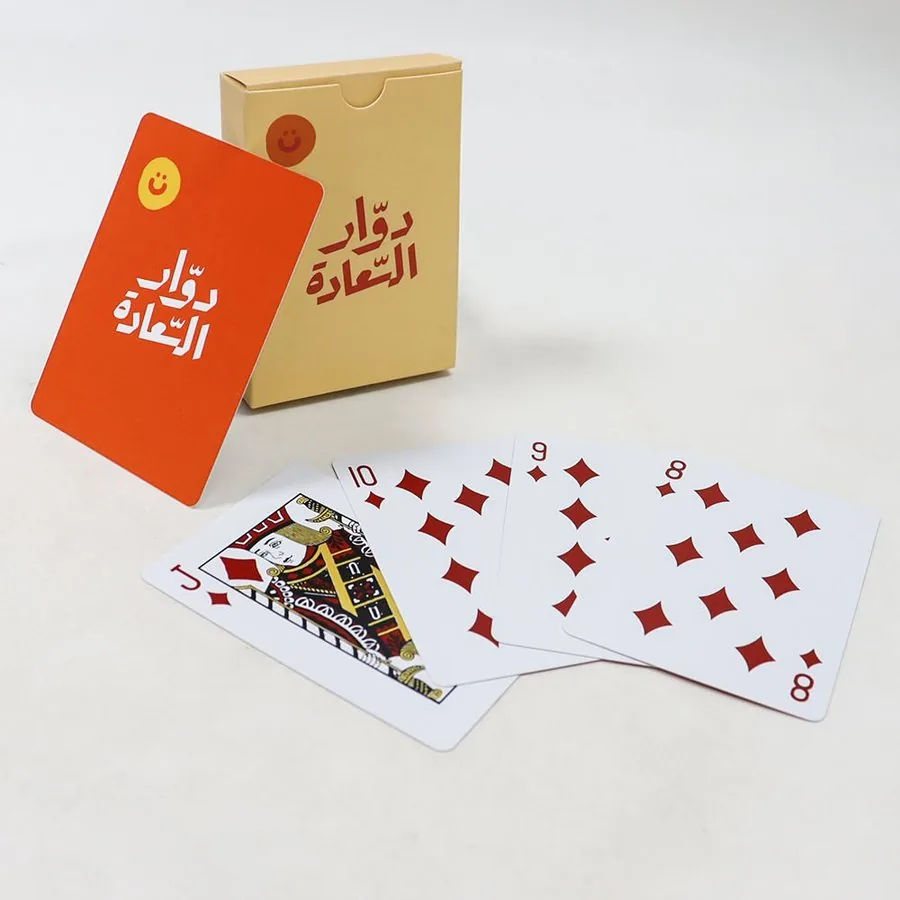
A deck is described as waterproof in two very different ways, and only one of them survives a season of real use.
Most playing cards are paper with a surface coating. The coating can be very good — it resists a spilled drink long enough to wipe the card dry. But the paper core is still paper. Let water reach an exposed edge, and the card swells, delaminates and marks. Once that happens it never goes back.
This is why a paper deck that has been "waterproofed" usually performs well in a demo and poorly in a beach bag.
A PVC card has no paper core. The body itself is plastic — typically 0.32 mm to 0.4 mm thick — and the printed artwork sits on that body. There is no coating to wear through, because there is nothing underneath it to protect.
In practice this is the difference between a deck that gets replaced every season and a deck that gets replaced when the design changes.
Three questions separate the two:
Ask for the test scope in writing. If a supplier cannot describe it, treat the claim as marketing rather than specification.
For a hotel, a restaurant or a licensed venue, cards are handled constantly, in humid rooms, next to drinks. A paper deck can be a real ongoing cost. A PVC deck costs more per unit once and less every year after that — which is usually the argument that gets it approved.
Tell us what the deck is for. We come back with a specification, a sampling plan and a production window — before you commit to a bulk order.
Sampling from USD 50 · 7–10 days after artwork approval · fee deductible on orders above 5,000 decks
 YUHUA PLAYING CARDS
FSC certification is held for applicable paper-based items and does not extend to the PVC card body. Specifications, availability and lead times are confirmed per project.
© 2026 YUHUA PLAYING CARDS. All rights reserved.
GUANG DONG YUHUA PLAYING CARDS CO., LTD · 广东宇华扑克有限公司